⚪ Choose the next surface
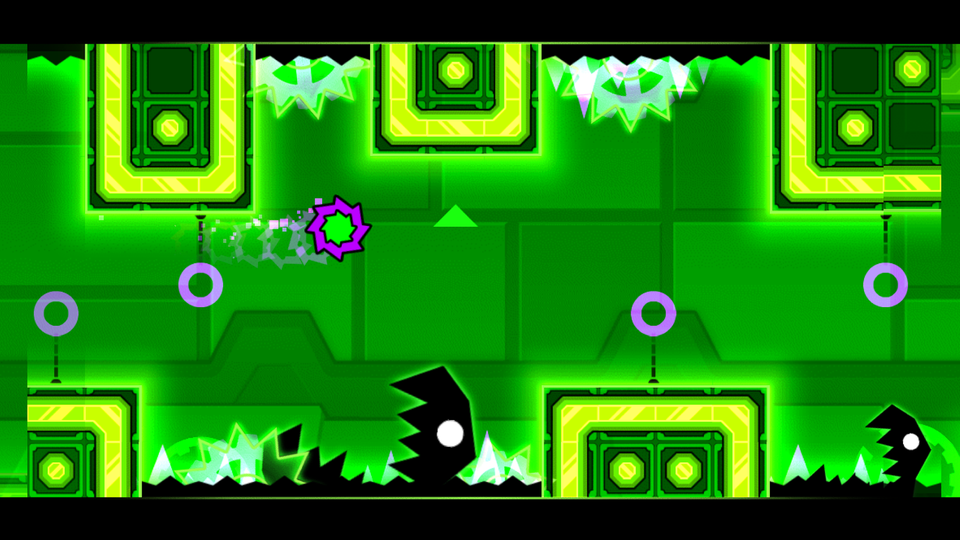
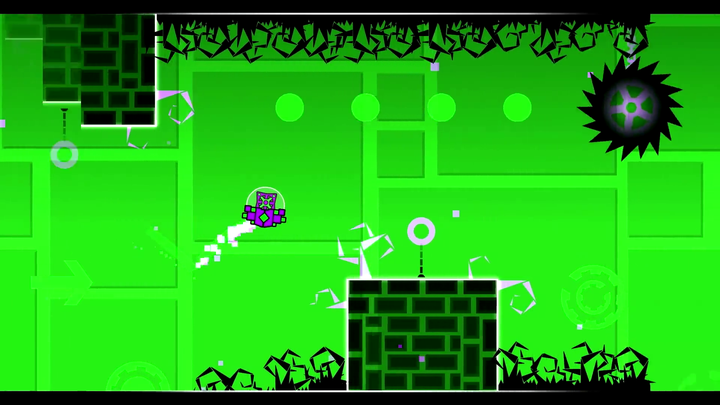

An ordinary ball input reverses gravity when the ball is able to act from a surface. It then travels toward the opposite side under gravity rather than teleporting there. That travel time is part of the move.
Read the destination before pressing. A clear space above the icon is not enough if the eventual landing sits on a hazard. Look at the route between the two surfaces and at the next action after contact.
An input that seems ignored
An ordinary second Ball switch needs a valid surface action. While the icon is travelling between surfaces, another click is not a general-purpose midair reversal. An orb can provide a separate interaction, so first identify whether the route expects surface contact or an object activation.
If a ring is part of the route, study the activation window separately from the ball’s ordinary surface action. The object may provide the move that normal contact does not.
🧲 Ball is not Spider
| Question | Ball | Spider |
|---|---|---|
| How does the transfer happen? | The icon travels under the new gravity | The icon transfers instantly to the opposite surface |
| What can catch you? | The path and landing during travel | A bad destination or wrongly timed transfer |
| What should you confirm? | A valid action state and incoming route | A safe landing surface before switching |
Both forms involve opposite surfaces, but learning them as the same timing pattern creates avoidable mistakes. Keep the distinction between travel and instant transfer clear.
Movement comparison only. The drawn distances are not a timing window or a level layout.
🧪 Floor–ceiling–floor
Mark both landings
Choose one clear surface on each side of a simple section.
Switch and observe
Watch the travel to the first destination without adding rescue taps.
Confirm contact
Use the landing as the cue for the next decision.
Join the next move
Extend the route far enough to verify that the second landing is useful.
Gravity reading without panic
Use the active surface as the local floor. Once the ball reaches the upper side, the familiar idea of standing on a surface still applies. You are choosing when to leave it, not trying to operate a reversed keyboard.
When a section changes speed or size, practice its approach as well as the switches. A route that works from a settled checkpoint can fail from a different incoming state. That is a setup problem worth checking before you make every click faster.