🎯 Pick a target smaller than the level
Before pressing restart, choose the next thing you want to make reliable. Good targets are specific: enter the ship near the middle of the corridor, activate one ring with a separate tap, or cross a jump group without changing your input rhythm.
“Beat the level” is the long-term outcome. It does not tell you what to do differently on the next attempt. A small target does. Work on the first unreliable section instead of rehearsing the opening endlessly and hoping the ending will take care of itself.
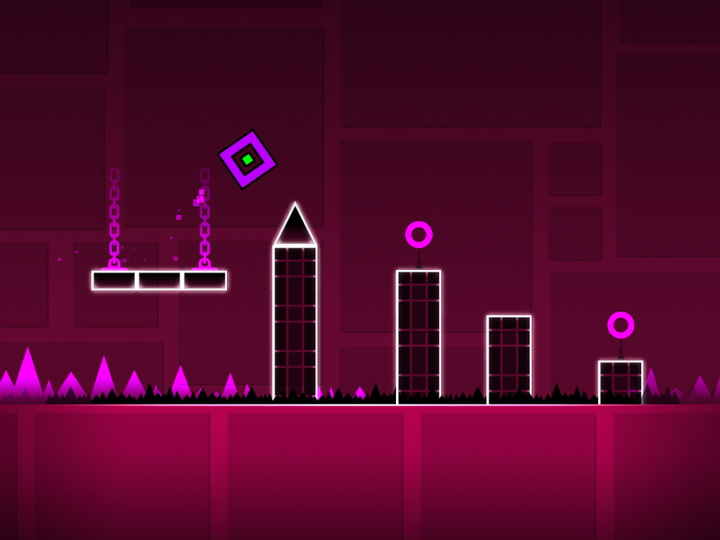
 Geometry Dash featured star
💡 Keep a useful note
Write a plain instruction you can follow during play: “Release as the ship passes the block,” rather than “ship is hard.” A strong note names an action and a visible cue.
Keep a tiny attempt log: “front spike / press earlier / cleared front, caught last spike.” That result tells you the next test should inspect the complete arc, rather than moving every jump earlier. Stop recording once the cue is clear; a log is a diagnosis tool, not another score to chase.
🔍 Match the symptom to the habit
| Repeated problem | Likely habit to examine | A useful experiment |
|---|---|---|
| Landing into the next spike | Watching only the obstacle you just cleared | Look at the landing and next takeoff as one pair |
| Climbing into a ship ceiling | Holding thrust until height looks correct | Release earlier and watch the remaining upward movement |
| Missing a ring while holding | Treating contact as automatic activation | Use a clear new press while overlapping the ring |
| Failing after a portal | Carrying the old form’s rhythm forward | Practice the last input before and first input after the portal |
A compact practice session
Observe without rescuing
Play far enough to see the failure. If you are already doomed, watch where the next safe surface would have been rather than filling the screen with extra presses.
Choose a single correction
Move one tap later, shorten one hold, or look farther ahead. Keep the rest of the approach unchanged.
Repeat the improvement
A lucky pass is a clue. Repeat it before treating it as your new technique.
Add the approach
Begin the run earlier so the correction survives the input and speed coming from the previous section.
Protect the easy parts
Do not add coin routes, cosmetic menu experiments, or a new input device while learning your first clean completion. Those changes may be fun, but they add variables to the part you were trying to understand.
Take a break when your familiar opening starts falling apart. Repeating an action while tense is still repetition, but it may be repetition of the wrong habit. Return with one clear target instead of a promise to grind until you win.
Compare useful outcomes rather than raw attempt totals. Did the changed release lower the next entry? Did the ring activate from the same takeoff? If the result is still unclear, watch the setup once more before adding a second correction.