🙃 Keep the control. Change the reference.
In an inverted cube section, gravity pulls toward the upper surface. Your jump leaves that surface and the arc returns toward it. You do not need to reverse the keyboard mapping or treat the jump button as a new command.
Use the surface the icon is standing on as the local floor. Read the next obstacle relative to that surface. Trying to mentally turn the entire screen around can consume attention that belongs on the next landing.
🧠 Inversion changes gravity, not your jump key
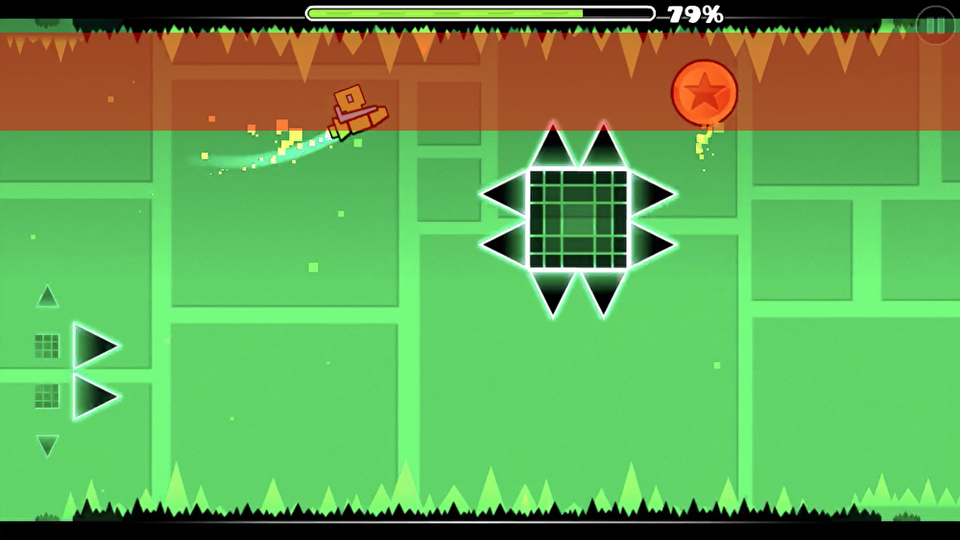
Inverted gravity is not a mirrored view. The icon still progresses through the course, but it stands on the upper surface and jumps away from it. Watch one takeoff and return against that local floor before trying to reinterpret the whole screen.
If the first inverted jump is unreliable, include the portal approach in practice. A checkpoint already settled on the upper surface may remove the transition you actually struggle with.
A transition worth rehearsing
Before inversion
Know which input is still active as you reach the gravity change.
At the first upper landing
Let the new surface become your reference before adding an unnecessary correction.
Across the inverted jumps
Use a familiar takeoff cue relative to the local floor.
On the return
Prepare the first normal-gravity landing instead of relaxing as soon as orientation looks familiar.
When the same spot keeps catching you
| Problem | Look earlier in the sequence |
|---|---|
| Immediate collision after inversion | The input carried through the portal and the first landing |
| An inverted jump ends too soon | The takeoff may be early relative to the obstacle group |
| An unwanted repeat jump | The main input may still be held at the landing |
| Failure after gravity returns | Attention may have dropped before the first normal action |
Avoid changing the timing of every inverted jump at once. Establish the entrance, then extend the reliable section a little farther.
👀 Simplify what you watch
Choose the next safe surface and the edge that marks takeoff. Let decorative motion stay in the background. The more the orientation feels strange, the more valuable a plain course feature becomes.
That approach also helps in other portal transitions and in the camera-heavy stages of SubZero. The visual effect can change while the basic task remains a safe route through geometry.
A transfer check
Include the return to normal gravity in the same test as the inverted stretch. A familiar-looking floor can arrive while an input is still held. Read the first grounded action after the return instead of treating the visual change as the end of the section.
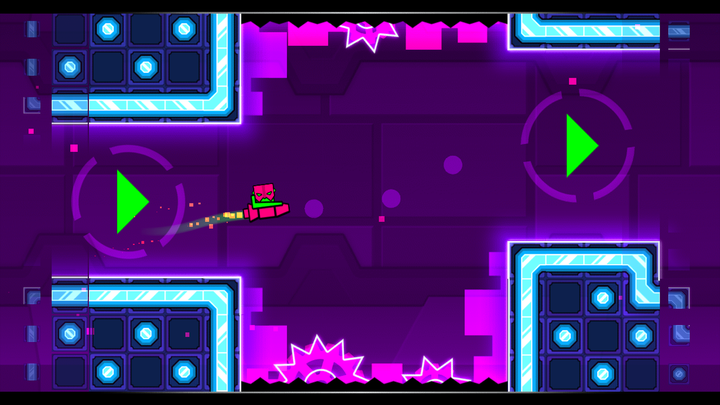
 Geometry Dash blue gravity orb