🕹️ Choose a different movement challenge
Each game has its own player and control guide. The comparison below helps you choose a different movement challenge while keeping Geometry Dash as the starting point.
Compare the decision you make
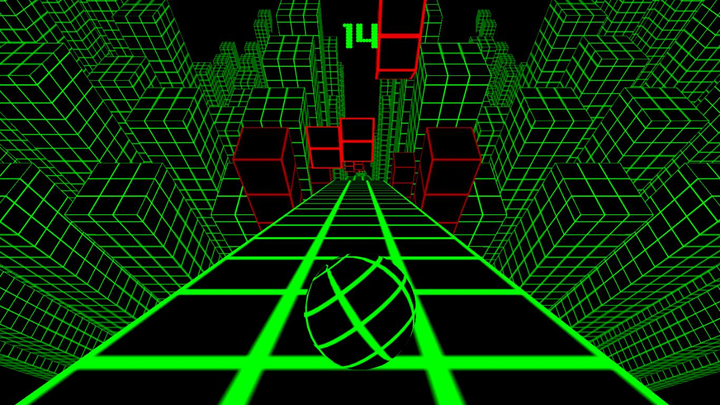
Slope
How much to steer a rolling ball
Looking ahead and avoiding oversized corrections
Play & read the guide ↗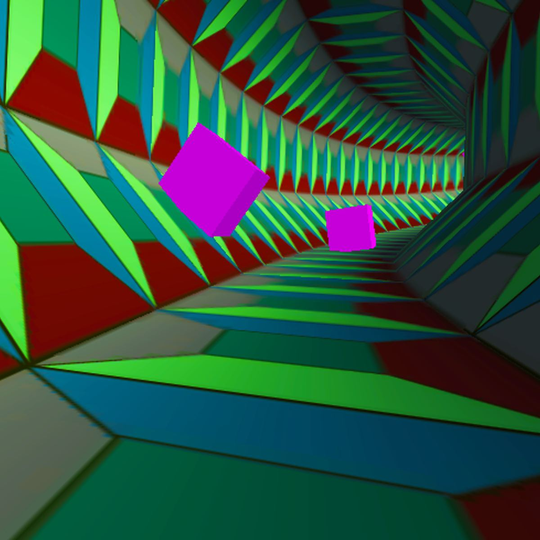
Tunnel Rush
Which opening to move toward
Reading a safe destination before acting
Play & read the guide ↗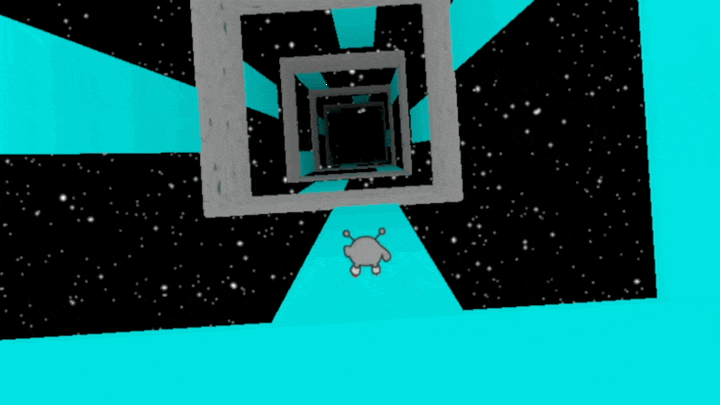
Run 3
When to jump or use a different tunnel surface
Planning the landing and next approach
Play & read the guide ↗These are qualitative comparisons, not performance rankings. None of the games uses the exact Geometry Dash movement system simply because it also rewards timing.
⚡ If you enjoy quick correction
Slope gives you continuous steering rather than a fixed cube jump. The useful carryover is restraint: a small early change can work better than a large correction when the edge is already close.
It is a good change of pace when you want to react to the course in front of you rather than rehearse one fixed input sequence.
🌀 If you enjoy finding the route
Tunnel Rush asks you to identify the safe opening in an approaching obstacle. Moving toward the gap is more useful than staring at the largest colored wall.
Run 3 offers another kind of spatial reading. A wall can become the floor, so the route may involve a new surface rather than a longer jump over the same gap.
What to reset when you return to Geometry Dash
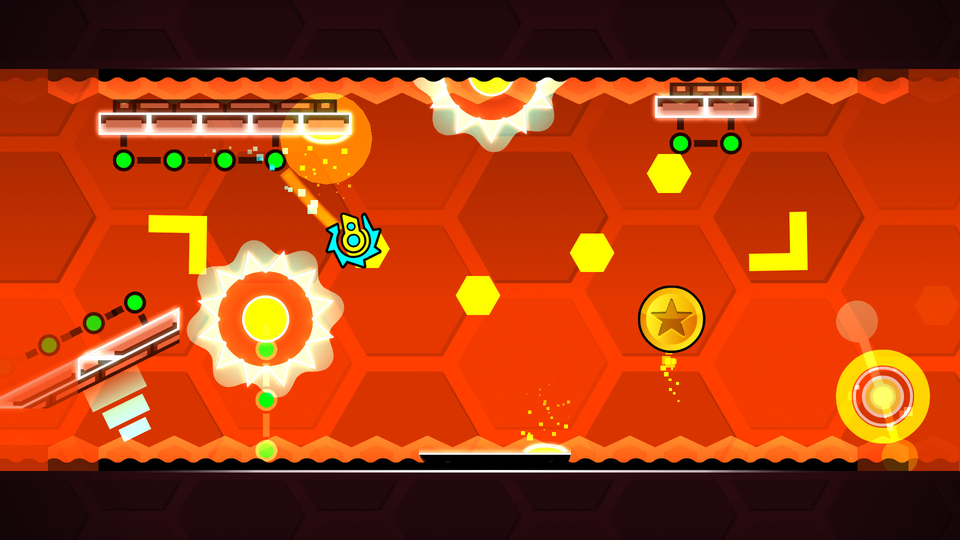
After steering in Slope or Tunnel Rush, remember that an ordinary Geometry Dash Cube does not move sideways on command. After Run 3, do not carry over variable jump holds: the Cube’s ordinary arc is fixed, while Robot has a limited held jump. Re-establish the active form’s rule before judging your timing.
When you return, keep the specific target from your practice routine. A break is easier to use when you still know which action you want to improve.