🟨 Let the pad finish its job
A yellow pad activates when the icon touches it. It is not a jump ring that waits for a tap in midair. Watch the first automatic launch carefully so you can see the arc the level supplies before deciding what extra action is necessary.
If the next landing causes an unexpected jump, inspect whether you kept the main input held through contact with the floor. The pad may have worked correctly; the unwanted action can be the jump you queued afterward.
🎯 Your attention belongs beyond the pad
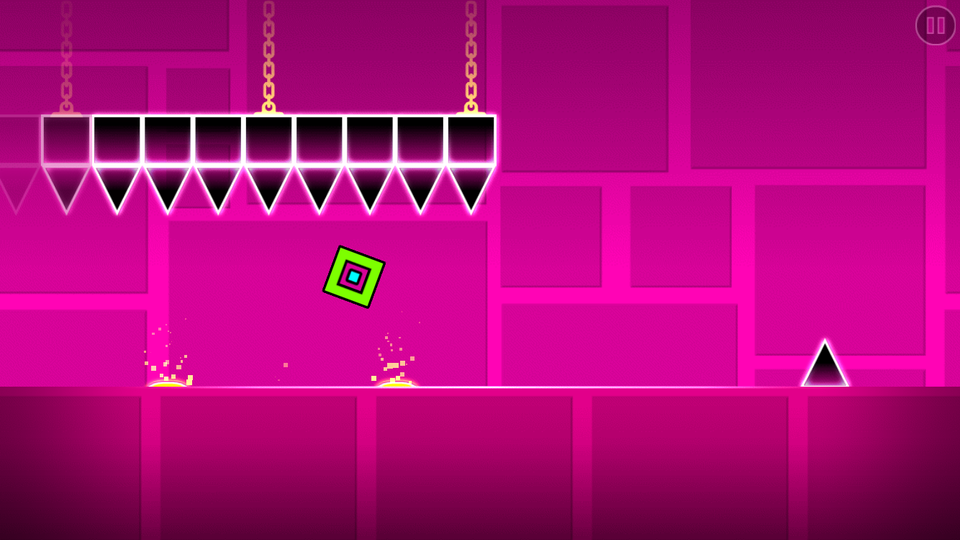
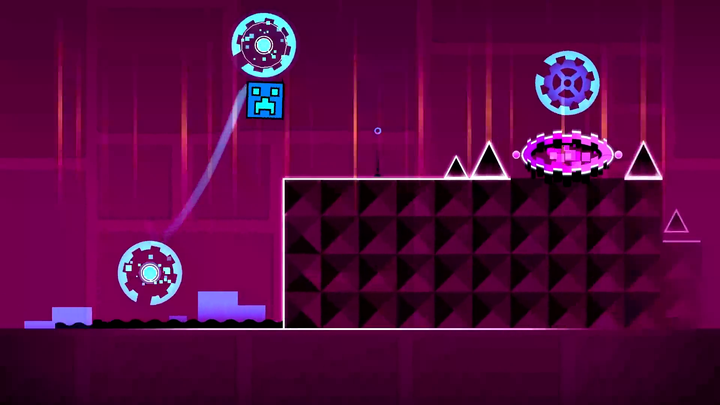

Compare three different mistakes around the same pad. Jumping before contact may skip it; touching it supplies an automatic launch; holding through the following grounded landing can add another jump. Identify which event went wrong before moving the pad approach earlier or later.
This habit transfers well to later stages: some objects trigger automatically, while others ask for input. The orb and pad comparison makes that distinction explicit.
Separate three events
Approach
Keep the route stable before the pad. An extra jump may prevent the intended contact altogether.
Automatic launch
Observe where the pad sends the icon. Do not add a press simply because the cube is in the air.
Next landing
Choose deliberately whether the following surface needs a fresh jump, a continued hold, or no action yet.
Keep the flight section calm
The ship portions still ask for smooth height management. The new pad mechanic does not mean you should enter flight with a frantic tapping rhythm. Check the first opening, then use short corrections and early releases.
If a ship attempt varies wildly, return to the entry. A different hold before the portal can change the state you bring into the corridor. Practice the approach and first correction together.
🧪 A pad-focused practice exercise
| Attempt focus | Observe | Keep unchanged |
|---|---|---|
| Contact | Does the cube actually touch the pad? | The approach route |
| Launch | Where does the automatic arc peak? | Your input during the launch |
| Landing | Does a held input cause another jump? | The timing of earlier jumps |
| Connection | Can the next obstacle be read early? | The successful pad setup |
When the sequence becomes reliable, add the next few obstacles. A pad solved in isolation is only part of the route. Its usefulness is the safe position it creates for what follows.