🟦 First, make single jumps boring
Stereo Madness is a first lesson in two different controls: grounded cube arcs and held ship flight. In the opening, use the space beyond each spike group to judge whether the jump ended where you expected. Once the ship arrives, stop treating every input as an isolated jump.
For a group of spikes, aim to clear the whole group with a useful landing beyond it. If you jump very early, the front spike may be safe while the last one catches the end of your arc. If you press too late, the front edge is the problem. Watch the entire jump before deciding which correction to make.
🚀 Enter the ship with a light touch
The ship does not behave like a cube with wings. A hold changes its vertical motion continuously, and releasing still leaves movement to manage. Large, late corrections can send you from one unsafe edge of the corridor to the other.
Work toward the middle of the usable passage. Make a small correction, release, and watch the result. If you reach the desired height while still holding, the ship can keep climbing into the ceiling. The ship guide develops that release-before-the-target habit.
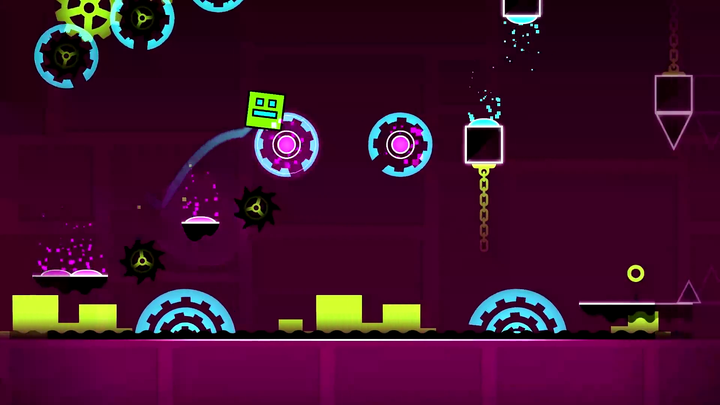
 Geometry Dash Easy difficulty face
The first-completion route
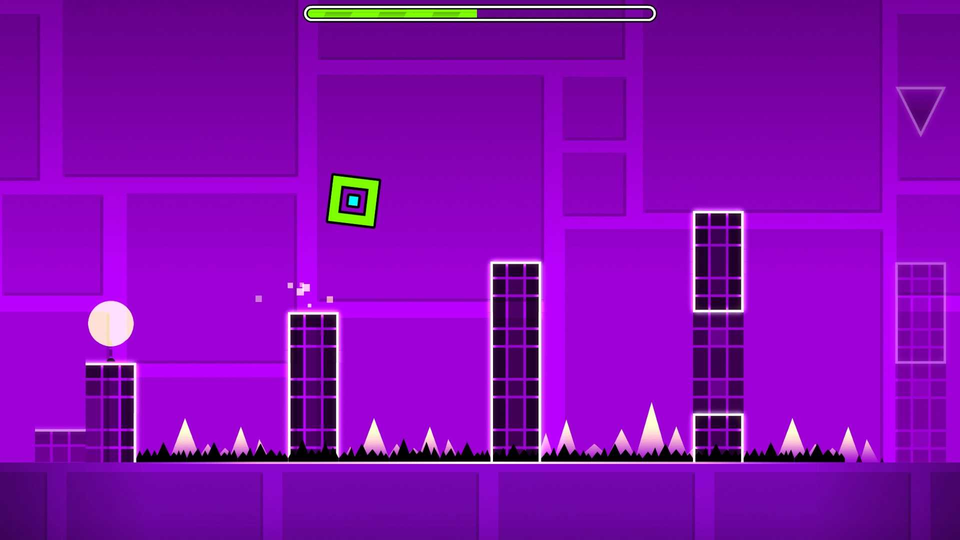
- Stay on the straightforward course rather than chasing coins.
- Use the same input for the whole session.
- Notice the ship entrance before reaching it.
- Treat a held input as something that continues after the form changes.
🔍 Diagnose the repeating failure
| Failure | Inspect | Next attempt |
|---|---|---|
| Last spike of a group | An early takeoff that ran out of arc | Delay the jump slightly while keeping the rest unchanged |
| Front of the first spike | A late takeoff | Move the press a little earlier |
| Ship hits the ceiling | A hold that continued too long | Release before the ship reaches the intended height |
| Crash just after returning to cube | The held input carried across the transition | Prepare the landing and choose whether to keep holding |
Give the ending its own practice
Practise the final cube-to-ship entrance with enough of the preceding jumps to reproduce the input you bring into flight. Keep the main flight line reliable through the finish before adding an optional coin detour.
Do not make the first full run depend on a last-second discovery. The more of the ending you can describe before arriving, the less pressure the progress bar adds.
🪙 Leave the coin route for another run
Secret coins are an optional challenge. First establish the direct completion. Then examine what a coin detour changes: takeoff, flight height, return position, or all three.