🟡 The ring is an input window
The jump before a ring puts you within reach. The activation is a separate event while your icon overlaps the ring. If you press too soon, you can arrive at the circle after the useful press has already happened. If you wait until you have passed it, the opportunity is gone.
Build the action as a pair: takeoff, then ring tap. Keep the first jump stable while you test the second input. That stops a moving approach from disguising the actual ring timing problem.
Do not make the coin route your default yet
A secret-coin detour can change the height or timing you need after a ring. If your immediate goal is a normal finish, practice that route on its own. Afterward, compare what the detour changes and where it returns you to the main course.
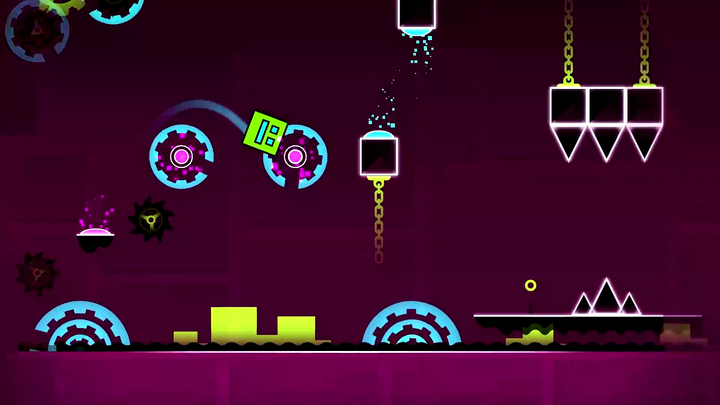
 Geometry Dash yellow jump orb
A clean input sequence
Reach the ring
Use the intended jump rather than adding a last-second rescue input.
Make a distinct activation
Test a clear tap during overlap. Do not assume an earlier hold always supplies the action you need.
Read the boosted path
Follow the resulting arc to the next surface. A triggered ring can still be activated at an unhelpful point.
🔍 Three ring failures that feel alike
| What happens | What to examine | A useful correction |
|---|---|---|
| The ring never activates | The press occurred outside contact | Move the ring tap into the overlap |
| The boost happens but hits a hazard | The activation point or approach arc is wrong | Keep the approach fixed and adjust only the tap |
| A later jump occurs unexpectedly | The input stayed held through landing | Release deliberately before the surface if the route needs it |
Input buffering and hold behavior can differ between native play and a Scratch recreation. Treat what the loaded project actually does as the rule for that session.
🎵 Give the second action its own cue
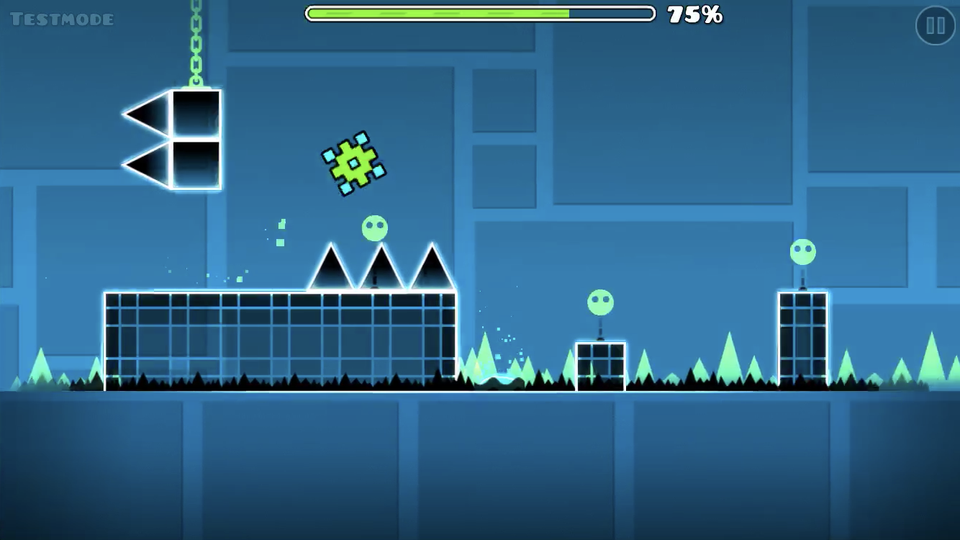
A musical cue can help distinguish the jump from the ring tap. Confirm it against the visible overlap first. Counting beats without checking the icon can make an early press feel “correct” even when it misses the activation area.
Once the pair is consistent, bring in the next obstacle. The ring is useful because it places you on a route; success is not just the flash of activation.