🚀 Control motion, not just position
Under normal gravity, holding applies lift and releasing allows gravity to pull the ship downward. The path curves between corrections, so notice both height and whether the ship is climbing or descending. Under inverted gravity, reinterpret that control relative to the new gravity rather than expecting the same screen-up response.
That is why a late, long correction often creates a second problem. You escape the floor, arrive near the ceiling with upward motion, then overcorrect back down. Smaller changes made earlier give the path more room to settle.
The useful middle is a corridor
Do not force the icon onto one imaginary center line at every instant. Aim to stay within a usable band that leaves room above and below. Correct when the trend is taking you out of that band, rather than reacting to every small deviation.
In a narrowing passage, identify the next opening before making a large height change. A correction that fixes the current position can still place you badly for the next wall.
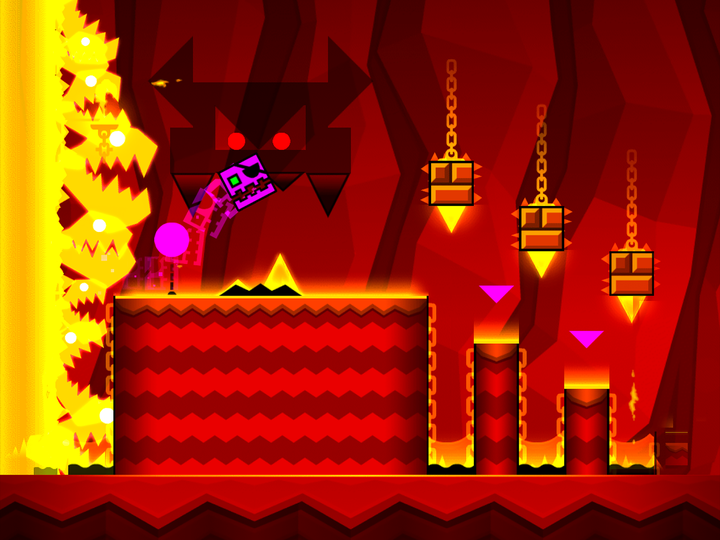
 Geometry Dash ship portal
📉 Read position and direction
| Position | Motion | Likely need |
|---|---|---|
| Low | Still falling | Begin a controlled lift before the floor is close |
| Near the target height | Climbing | Release early enough for the rise to settle |
| High | Already descending | Allow the descent rather than adding an immediate rescue hold |
| Entering a tight gap | Unstable alternation | Reduce the size of corrections and inspect the entry |
This is a diagnosis guide, not a set of fixed input durations. Speed, gravity, and corridor shape change the exact movement.
Conceptual normal-gravity flight. The curve explains continued motion, not a prescribed hold duration.
🧪 A controlled flight exercise
Use a forgiving passage
Choose a section with room to see the result of a short hold.
Make one lift
Watch how the ship moves after you release. That remaining motion is the part many beginners overlook.
Reduce the correction
Try a shorter hold from a similar entry. Compare the whole path, not just its highest point.
Add the real entrance
Practice from before the portal so the height and input state match the level.
What “straight fly” actually asks
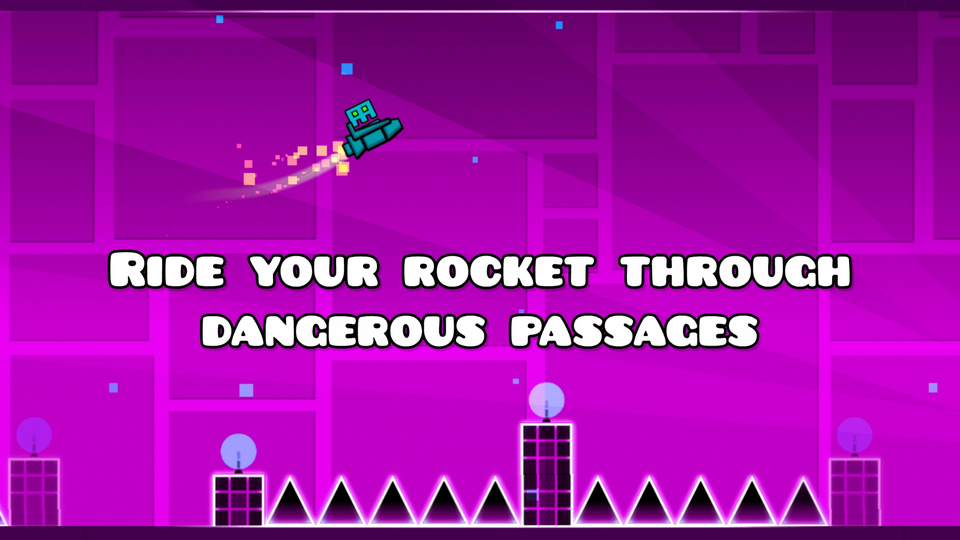
Players use straight fly for keeping a ship in a relatively narrow horizontal corridor. It is still a series of controlled changes, not a special mode unlocked by tapping fast.
Straight fly is not a maximum-click-rate test. If quick alternation makes the path widen, use the wider passage to compare a shorter lift and an earlier release. Keep enough of the preceding entry to preserve the vertical motion you are trying to control.